

Is Pacman A Registered Trademark
This commodity is written past Nidhe Sushrutha, pursuing a Diploma in Intellectual Holding, Media and Entertainment Laws from Lawsikho.com.
What is a trademark?
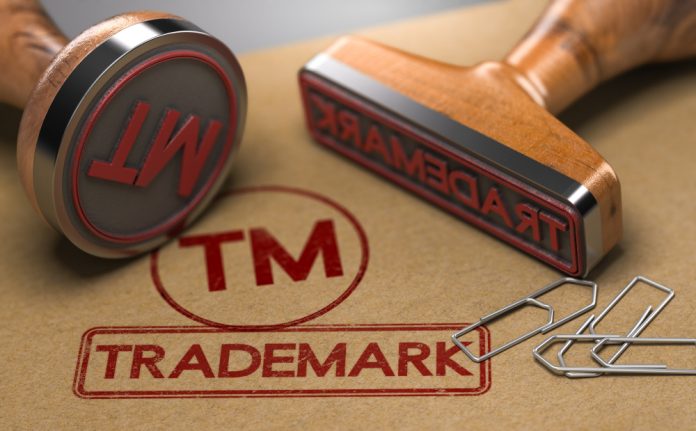
A trademark is a sign capable of distinguishing the appurtenances or services of one enterprise from those of other enterprises 5 .
Co-ordinate to the Department 2(1)(thousand) of the Trade Marker Act, 1999: "mark" includes a device, brand, heading, label, ticket, name, signature, word, messages, numerals, shape of goods, packaging or combination of colours or any combination thereof.
Importance of trademark and its protection
Many establishments provide the same kind of goods and even though these players are in the aforementioned market and provide like goods, they often differ in quality and other characteristics. It is in order to protect these unique characteristics of each player that the practice of using trademarks emerged. Trademarks aid consumers recognise manufacturers and aid manufacturers sympathize and see consumer expectations. It therefore increases recognition of the manufacturer thereby attracting consumers and inspires trust in the consumer towards the manufacturer. It is for this reason that trademarks are legally protected, for in its absence, a competitor could guise their products to look like that of some other establishment and thereby utilize the original manufacturer's reputation for their own advantage and harm the reputation of the original manufacturer in the procedure.
The apply of a mark by an unauthorised user, which is identical or confusingly similar to a registered trademark, is known every bit trademark infringement. In example of an unregistered trademark, there is no statutory protection under the Merchandise Mark Human action, 1999. Still, unregistered trademarks are protected by the common police force concept of passing off.
To know more than most Trademark please visit
Registration of a trademark is not mandatory. When a dispute arises regarding the utilise of a mark, it is the first commercial user who has a claim over the subsequent registered user. However, co-ordinate to Section 31 of the Trade Mark Human action, 1999, the registration of the trademark shows that it is prima facie valid. The burden to prove kickoff apply is on the party asserting it.
Rights arising from registration of trademark
- Exclusive correct to use trademark for the designated goods or services.
- Right to exclude others from using the mark.
- Restriction of the exclusive correct in the public interest.
Trademark infringement
Section 29 of the Trademarks Act, 1999 describes trademark infringement. According to it, " a registered trademark is infringed by a person who, not being a registered proprietor or a person using by mode of permitted use, uses in the course of trade, a mark which is identical with, or deceptively similar to, the trademark in relation to the goods or services in respect of which the trademark is registered and in such fashion as to render the use of the mark likely to be taken equally being used as a trademark ".
To know more well-nigh Trademark infringement please visit
From the definition above, four necessary elements can be identified:
- The person in apply of the mark must not have been the registered proprietor or a person permitted to apply the mark past the registered proprietor;
- The marker must have been in relation to the goods and services for the purpose of which the trademark is registered;
- The marking must take been identical or deceptively like to the registered mark; and
- The use of the marker must be such that information technology could be perceived as beingness used as a trademark (for a commercial purpose).
The standard for trademark infringement is the "likelihood for confusion" half dozen . Courts rely on consumer psychology for determining whether at that place has been an infringement and the post-obit factors are taken into consideration:
- Strength of the mark
- Proximity of the goods
- Similarity of the marks
- Show of bodily confusion
- Similarity of marketing channels used
- Degree of caution exercised past the typical purchaser
- The defendant'southward intent

Available Defences
-
Fair Utilize
In guild to plead this defence successfully, the defendant infringer will have to prove that he had obtained the consent of the trademark owner or found that he acted without any intention to defraud the consumers of the appurtenances.
There are two types of fair employ:
Descriptive fair use
This refers to a situation where a mark has been used in good faith, primarily for a descriptive purpose rather than in order to refer to a specific marker or product.
Nominative fair use
This refers to the state of affairs where a mark is incorporated in lodge to refer to the registered proprietor'south product and not for the user's product. This is justified where the utilize of the mark is necessary in lodge to facilitate identification of the production.
The application of this defense force requires the following weather condition to be satisfied:
- The product or service is not identifiable without the mark,
- The mark was used only to a reasonable extent to facilitate its identification,
- The employ does not falsely suggest endorsement or sponsorship by the trademark owner.
In neither of these cases would the court conclude of the defendant having infringed the plaintiff'south trademark.
-
Prior Employ
The rights of the prior user of the mark will override the subsequent user even if the subsequent user has registered the trademark. This allows a accused to accept up this defense force where the accused has been using the mark for a longer duration of time every bit compared to the registered user and has gained a reputation in the merchandise concerned.
In the instance M/southward R.J. Components and Shafts five. Yard/s Deepak Industries Ltd 7 , the plaintiff was the sole proprietor of the registered trademark NAW who was in the business of manufacturing and marketing of inter alia 'gears' being tractor parts. The marker was registered in 1983 and was all the same valid at the time this dispute took identify. The defendant argued that the trademark was obtained by fraud for the plaintiff was aware that the trademark belonged to the defendant who was using the same mark uninterrupted with respect to gears being tractor parts since 1971 from their manufacturing unit Grand/s New Allenberry Works, Faridabad, the abridgement of which was used equally a trademark. The appurtenances of the defendant were being supplied to various authorities departments and semi-government departments on contract basis in add-on to sale to the general public, therefore the trademark had go distinctive and associated with the name of the defendant alone. Although the trademark was never registered past the defendant, the court held in their favour.
The defence of prior use may also be pleaded where the accused has non renewed a previously registered trademark but has continued to carry concern under the same mark.
-
No Confusion or Deviation in Essential Features
The divergence betwixt the two trademarks in question is just as of import as the similarities between them when deciding on infringement of trademark. With regard to the same, the courtroom non but considers the phonetic similarity but as well whether or not the two marks differ in their essential features.
In the example S.M. Dyechem Ltd. 5. Cadbury (India) Ltd. 8 , the plaintiff was using the trademark PIKNIK since 1989 which was registered in Class 29 (preserved, dried and cooked fruits and vegetables), Class xxx (confectionery and chocolates) and Form 32 (beverages and mineral h2o). The defendant was using the trademark PICNIC for chocolates which was registered in 1977 in grade 30, which expired after 7 years and was not renewed. "Cadbury'south PICNIC" and/or "PICNIC" and/or the label was registered in 110 countries and enjoyed trans-border reputation and goodwill.
It was in this case that the Supreme Court laid downwardly that, in deciding a example of trademark infringement, the courtroom must also look into the differences in the essential features and laid down the post-obit test:
- Is there any special aspect of the common features which has been copied?
- Whether the dissimilarity of the part or parts is enough to mark the whole thing dissimilar?
- Whether when there are common elements, should one not pay more regard to the parts which are not common, while at the same time not disregarding the common parts?
- What is the first impression?
Applying this test in the case, information technology was held that the two marks were different in essential features and would non be a cause for confusion. Therefore, no cost was awarded.
If in a given instance, the essential features have been copied, the intention to deceive or to cause confusion is non relevant ix and the infringing party would be held liable by the courtroom.
-
Marks Used in Unlike Marketplace
The difference in the market in which the marker is used may be a departure in the geographical location or the difference in the grade of goods and services. However, this defense is not considered to be a skilful ane since it could hinder the plans of the trademark owner to expand into a market place of different products or to dissimilar geographical locations.
In the case of Milmet Oftho Industries and Ors. v. Allergan Inc x , both parties were pharmaceutical companies, both of whom produced an eye care product nether the name "OCUFLOX". The defendant argued that they had prior apply of this marking globally and they outset used the mark in September 1992. The plaintiff was producing this product in Bharat lonely. The Supreme Court held that issues may occur between the use of the mark past one entity in Bharat and another overseas, peculiarly considering that the marking is the aforementioned for a similar drug and that the accused not using the marking in Bharat is irrelevant since they were first in the earth market place.
A ratio was besides laid downwards in this case that held that multinational companies have no right to claim exclusivity of the trademark if they do non enter or intend in a reasonable time to enter into business in India. This was applied in the following case of Munish Kumar Singla Trading (Chakshu Food Products) v. Jollibee Foods Corporation xi .
In this case, the accused was in the business of fast food and was based on the Philippines. They had registered the marker "Jollibee" with an image of a bee in India in 2005 but had not commenced business in India even after 12 years in 2017. The plaintiff was in the business organisation of selling packaged spices and proposed for registration a mark with "Chakshu" with a like paradigm of a bee as the accused. The court, applying the above ratio, decided in favour of the plaintiff.
The difference between the ii cases is that, in the case confronting Allergan Inc., the dictate laid downwardly in Cadila Health Care Ltd. v. Cadila Pharmaceuticals Ltd. 12 was applied, which stated that "in respect of medicinal products information technology was held that exacting judicial scrutiny is required if there was a possibility of defoliation over marks on medicinal products because the potential harm may be far more dire than that in confusion over ordinary consumer products."
In add-on to the geographical marketplace, the defendant tin can also fence the departure in the class of products existence produced. For instance if Fourth dimension Incorporated is using the mark "TIME" for their magazine, the mark "Fourth dimension" may besides exist used by some other with respect to production of watches. In such a case, the producer of watches under the marking "TIME" can plead the defence of divergence in the market successfully.
-
Non-utilize of the Mark past the Registered Proprietor
Unused trademarks serve no economic purpose and deed every bit an artificial barrier to the registration of new mark 13 . A menses of fourth dimension after registration is allowed earlier which the obligation to use comes into effect. The trademark may likewise exist used by a third party with the consent of the possessor through a license or a formalised agreement from the registered proprietor. The principal event of unjustified non-use of the trademark is that the registration is open to cancellation at the request of a person with a legitimate interest. Burden of proving non-use is on the interested party, not on the trademark owner. Therefore, if a defendant is to plead this defence force he would have the burden of proving the same. Non-use of the trademark tin be justified in case of force majeure or any circumstance which is not due to fault or negligence of the proprietor of the marker.
In the case of Munish Kumar Singla Trading (Chakshu Food Products) v. Jollibee Foods Corporation which was discussed above, the defendant had not been using the trademark registered past them fifty-fifty later on twelve years of registration. This is also a case of unjustified non-use of trademark.
-
Filibuster and Acquiescence
In the instance where there has been a delay in bringing action of the infringement past the plaintiff it is frequently ruled that the plaintiff has waived his rights as the trademark owner and implicitly or explicitly permitted use of its mark by the subsequent user. Acquiescence would corporeality to waiver, if not abandonment, of their rights.
The example Khoday India Ltd v. The Scotch Whisky Clan and ors. 14 becomes relevant with respect to this defence force. The Plaintiff manufactured whiskey nether the mark PETER SCOT since 1968. The defendant found out about the plaintiff's use of such a mark in 1974 and filed for rectification in 1986 considering of 2 factors, i being the presence of the term Scot in the PETER SCOT mark, and 2nd because of the presence of the slogan on the Whiskey bottle under the mark, which they alleged that had persuaded customers to call back that PETER SCOT brand Whiskey was besides a Scotch Whiskey. Khoday pleaded the defence of delay and acquiescence which was ruled in their favour. The High Court stated that acquiescence, in order to exist a ground to deny rectification, must be of such character every bit to establish gross negligence on the office of the applicant or deliberate inaction which had regulated in the appellant incurring substantial expenditure or being misled into the conventionalities that the respondents though entitled to, had deliberately refrained from taking whatsoever activity and were unmindful of the use of the mark by the person in whose name it was registered.
-
Parody
Information technology was held by the Delhi Loftier Courtroom in Tata Sons Ltd v. Greenpeace International and Greenpeace Bharat 15 that reasonable comment, ridicule or parody of a registered trademark can be made if the intention of the maker is to describe attention to some activeness of the owner of the trademark. Where the use is not completely for a commercial purpose, the court allows parody. This emerged because the courts gave more than importance to the freedom of voice communication and expression as against trademark police.
In this case, the defendant opposed the industrial activities of Tata in the institution of the Dhamra port, which, according to the defendants, has an adverse impact on the breeding of the injured species, Olive Ridley Sea Turtles. To create awareness for the same, they launched a game based on Pacman, titled 'Turtles v. Tata', where the turtles are portrayed as escaping the Tata logo. The plaintiff had filed a case for unauthorised use of their trademark and for the impairment to reputation thereby caused and sought for a temporary injunction confronting the game. The defense force in this case brought forth three arguments; first that the game was a irenic entrada against the plaintiff's projection, second that trademark law was inapplicable due to non-commercial usage, and third that awarding an injunction order without actual proof of defamation would amount to corruption of the process of police to suppress fair criticism. The court held that in balancing costless speech and intellectual holding rights, several factors would weigh in favour of freedom of speech when the expression is primarily communicative rather than commercial, and when the context and bear on of the speech suggests parodic usage.
-
Invalidity of Registered Mark
In a case of trademark infringement, the accused may argue that the registered marking of the plaintiff itself is invalid. Such a defense force would succeed where the defence is able to found that the registration has taken place in such a way that it creates an unfair advantage in favour of the plaintiff.
The Supreme Court held in Vishnudas Trading every bit Vishnudas Kishandas v. Vazir Sultan Tobacco Ltd., Hyderabad and Ors. xvi that a manufacturer who deals in merely one or more articles which fall under a broad nomenclature of goods and services, without bona fide intention to use the mark in relation to all those goods and services, should not be allowed to enjoy monopoly over the entire category of goods or services. Therefore, in such a case, the court may partially cancel registration as such an effort is not justified by any legitimate interest of the proprietor.
Remedies for trademark infringement
- Injunction past prohibition of use of the infringing mark.
- Injunction by cancellation of the registration, if the marker has been registered.
- Damages (may include punitive damages) or account of profits.
- Costs towards legal fees.
In club for a courtroom to award compensatory likewise equally punitive damages, proof of deception and intention of the infringer to infringe the plaintiff'southward trademark must be established 17 .
References
- The Trade Mark Human action, 1999
- Tata Sons Limited v. Greenpeace International , Global Liberty of Expression, Columbia University https://globalfreedomofexpression.columbia.edu/cases/tata-sons-limited-v-greenpeace-international/
- A.V. Thacker, P. Pradad, " India: Trade Marks 2020 ", ICLG, 2020 https://iclg.com/practice-areas/trade-marks-laws-and-regulations/india
- R. Kathuria, " India: Invalidity of a Registered Trademark: Uniformity in Indian and European Perspectives ", Mondaq, 2020 https://www.mondaq.com/republic of india/trademark/879970/invalidity-of-a-registered-trademark-uniformity-in-indian-and-european-perspectives
- Trademarks , WIPO https://www.wipo.int/trademarks/en/
- Overview of Trademark Law , Harvard https://cyber.harvard.edu/metaschool/fisher/domain/tm.htm#seven
- M/s R.J. Components and Shafts five. M/s Deepak Industries Ltd
- Southward.M. Dyechem Ltd. v. Cadbury (India) Ltd. AIR 2000 SC 2114
- Suvrashis Sarkar, Dr. Stephen D'Silva, "Trademark Infringement – A Case Study from Indian FMCG Sector", Indian Journal of Applied Enquiry, Vol. 3, Issue 10, Oct 2013
- Milmet Oftho Industries and ors. 5. Allergan Inc (2004) 12 SCC 624
- Munish Kumar Singla Trading (Chakshu Nutrient Products) v. Jollibee Foods Corporation 2017(72) PTC 608 (Delhi)
- Cadila Health Intendance Ltd. v. Cadila Pharmaceuticals Ltd. 2001 PTC 300 SC
- Introduction to Trademark Police force and Practise: the Bones Concepts, Affiliate 5: Use of the Marking, WIPO 1993
- Khoday India Ltd 5. The Scotch Whisky Association and ors. 2008 (37) PTC 413 (SC)
- Tata Sons Ltd v. Greenpeace International and Greenpeace India 2011 (45) PTC 275 (Del)
- Vishnudas Trading as Vishnudas Kishandas 5. Vazir Sultan Tobacco Co. Ltd., Hyderabad and Ors. AIR 1996 SC 2275
- Time Incorporated five. Lokesh Srivastava and Anr 2005 (xxx) PTC iii (del)
Students of Lawsikho courses regularly produce writing assignments and piece of work on practical exercises as a part of their coursework and develop themselves in real-life practical skill.
LawSikho has created a telegram group for exchanging legal knowledge, referrals and various opportunities. You can click on this link and join:
Follow the states on Instagram and subscribe to our YouTube channel for more amazing legal content.


Is Pacman A Registered Trademark,
Source: https://blog.ipleaders.in/defences-available-infringement-trademark/
Posted by: smithjould1995.blogspot.com
0 Response to "Is Pacman A Registered Trademark"
Post a Comment